
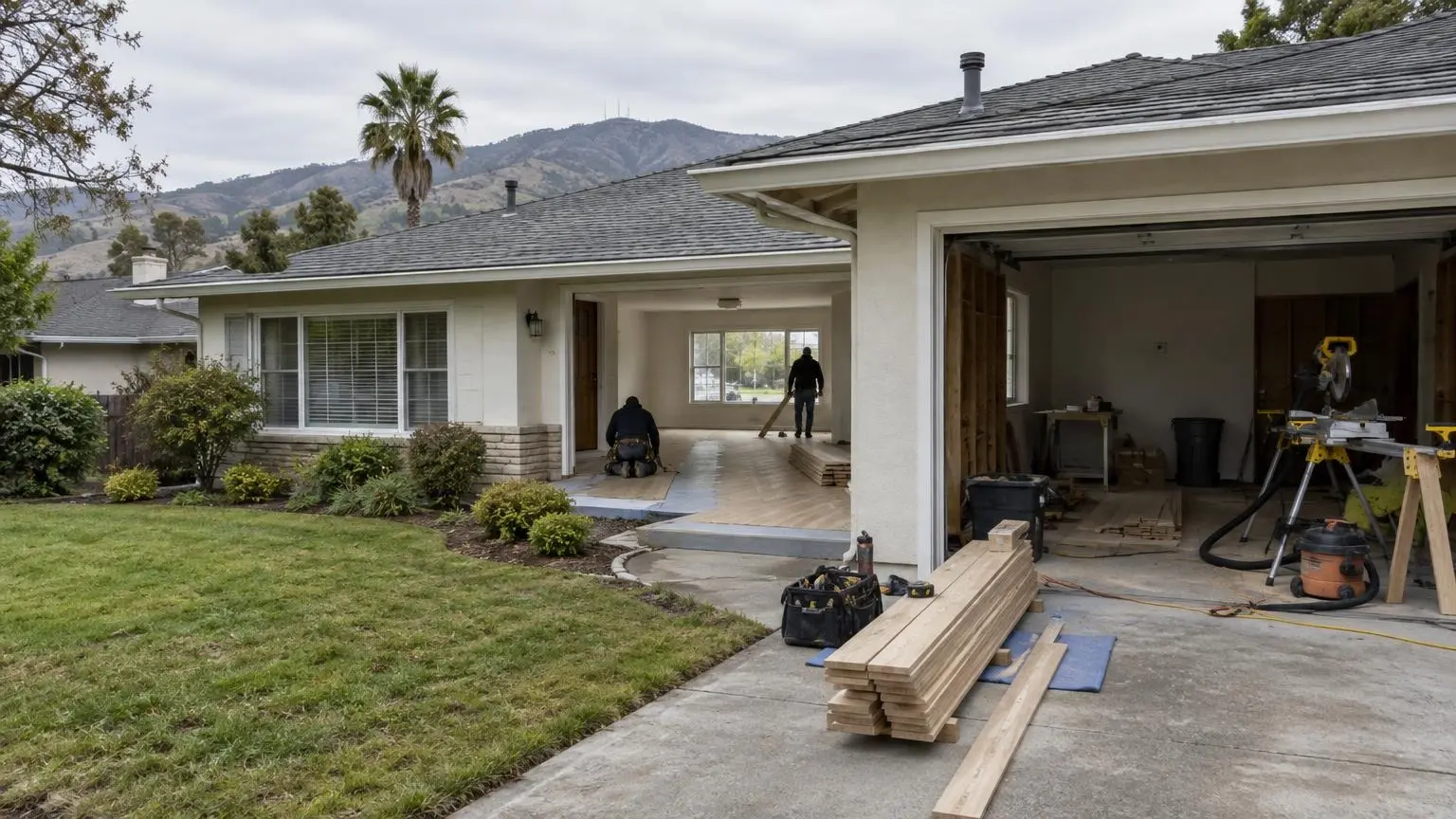
Inland valley heat, a city incorporated in 1983
Hardwood Flooring in San Ramon, CA
Wood floors chosen and installed for a valley that runs hotter and wetter than the bayside, in homes that are mostly newer than the hardwood trade is used to.
- Free on-site estimates with moisture readings
- Written, itemized quotes before any work starts
- Finish options explained, including low-VOC water-based coats
Wood Floors for an Inland Valley
Hardwood flooring in San Ramon has to handle a bigger swing between seasons than it does along the bay. July and August mean daily highs here are 80°F and 82°F, the record high is 111°F, and January lows average 37°F. Rain totals about 26.46 inches a year and almost all of it falls between November and March. Wood takes on moisture in the wet months and gives it up in the dry ones, so the way a floor is acclimated, laid out and finished matters more in this valley than in a mild coastal town.
A young city with young floors
San Ramon only became a city on July 1, 1983. Its population was 4,084 in 1970 and 22,356 in 1980, then climbed from 44,722 in 2000 to 72,148 in 2010. A large share of the housing is from the last few decades, and many of those homes came with carpet, tile or a factory-finished floor rather than site-finished oak. That changes the usual job. Instead of sanding a 70-year-old strip floor, we are more often removing builder carpet and laying new solid or engineered hardwood, or recoating a prefinished floor that has dulled in high-traffic paths.
What San Ramon homeowners usually ask us for
- New installation in living areas, bedrooms and halls after carpet comes out
- Engineered hardwood where a home sits on a slab or a floor needs to float over sound underlayment
- Screen and recoat on site-finished floors that are scuffed but not worn to bare wood
- Hardwood stairs to replace carpeted treads so the stair matches new flooring below
- Board replacement near kitchen sinks, refrigerators and patio doors where water has crept in
- Full refinishing on older solid floors that have enough wear layer left to sand
Gaps in winter, cupping in spring
A floor that goes down tight in the wet season can show gaps by late summer, and one installed during a hot, dry spell can push and cup once the rains return. The National Wood Flooring Association guidance we follow calls for the house to be held between 60°F and 80°F at 30 to 50 percent relative humidity, with the HVAC running, before and during installation. We also check that the subfloor and the new boards are within 4 percent moisture content of each other during acclimation. In practice that means we take readings at the estimate, again on delivery, and we do not install until the numbers line up. Leaving the right expansion space at walls and cabinets is the other half of the job.
HOAs and planned neighborhoods
San Ramon is largely residential with many newer housing developments, and many of those neighborhoods have an association with architectural guidelines. Interior flooring in a detached house is rarely something an HOA reviews, but rules about contractor hours, parking, dumpsters and where cut scraps go are common. Townhomes and condos are different: if anyone lives below you, the association may ask for an underlayment specification. We can provide product data sheets and a written scope you can submit before we book the job.
Finishes and indoor air
If you are living in the house during the work, the finish matters. California limits the VOC content of architectural coatings, and the CALGreen table lists 275 grams per liter for wood coatings, 250 for stains and 100 for floor coatings. Water-based polyurethanes are well within that range, dry faster and have far less odor than older oil-modified products. We explain the trade-offs in sheen, color and cure time so you can pick what suits your household, and we tell you when furniture and rugs can go back.
Getting a quote
Call (510) 751-0139 or send photos of the rooms. We measure on site, take moisture readings, look at transitions to tile and stairs, and give you an itemized written quote. San Ramon is a straight run up I-680 from Fremont.
San Ramon Facts That Affect Your Floor
- Hot, dry summers. July and August mean daily highs are 80°F and 82°F, and the city's record high is 111°F, set in September. Almost no rain falls in July (0.06 in.) or August (0.11 in.), so indoor air dries out and wood floors shrink.
- Wet, cool winters. Average precipitation is 26.46 inches a year, mostly from November through March, and January lows average 37°F. That seasonal swing is why acclimation and expansion gaps get extra attention here.
- Mostly owner-occupied. About 70.9% of San Ramon homes are owner-occupied, the median owner-occupied home value is $1,509,500, and 89.0% of residents lived in the same house a year earlier (Census ACS, 2020 to 2024).
- Rapid growth since 2000. The city was incorporated on July 1, 1983. Its population rose from 44,722 in 2000 to 72,148 in 2010 and to 84,605 in 2020, and Census estimates put it at 86,209 in 2025.
- Dougherty Valley build-out. A December 1988 agreement tied the Dougherty Valley project to the construction of about 11,000 houses, with Shapell Industries and Windemere Ranch Partners as the two main developers. Dougherty Valley High School opened in 2007.
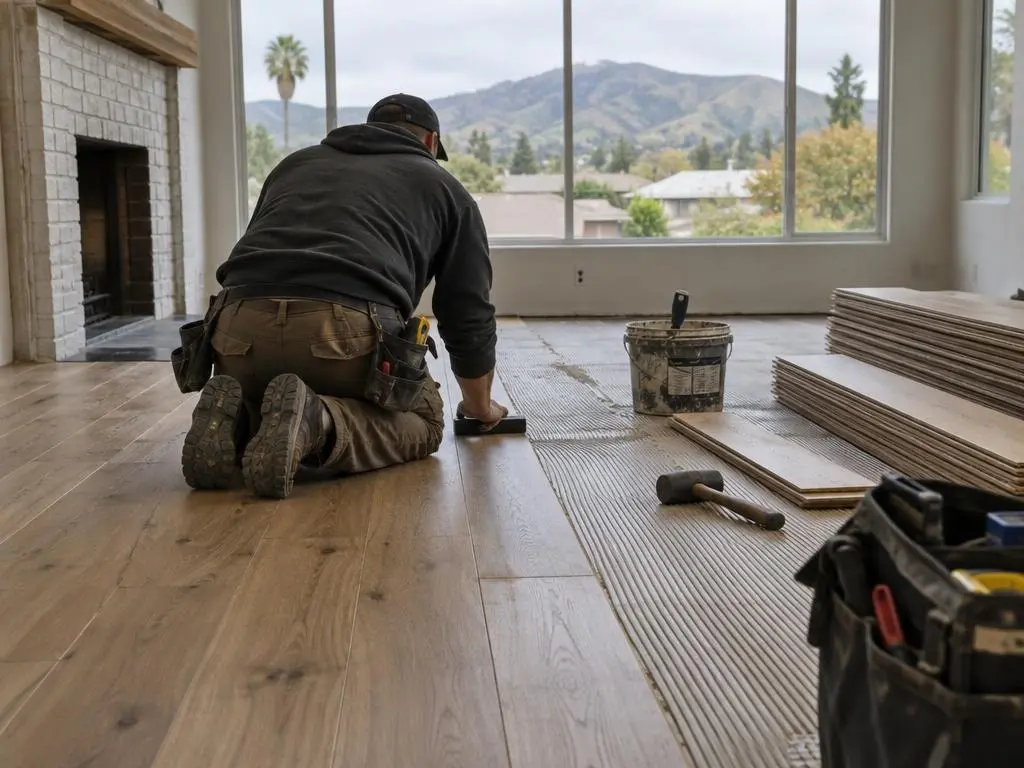
San Ramon Questions
Why do hardwood floors in San Ramon gap in late summer?
Wood shrinks as it dries. San Ramon gets hot, nearly rainless summers and wet winters, so boards lose moisture from June to October and regain it once the rains start. Small seasonal gaps that close up again in winter are normal. Large gaps or cupping usually trace back to boards that were not acclimated or to a moisture source, and we check for both before recommending repairs.
My house is from the 2000s. Is there hardwood under the carpet?
Often not. Many newer San Ramon homes have plywood or a concrete slab under the carpet rather than an older oak floor. We lift a corner in a closet at the estimate so you know what is there before choosing between new solid hardwood, engineered planks or another option.
Do I need HOA approval to install hardwood in a San Ramon townhome?
Many associations want to see the underlayment before hard flooring goes in over a neighbor. California's building code sets impact sound ratings for floor-ceiling assemblies between units (IIC 50 lab-tested or NISR 45 field-tested), and some HOAs set their own figure. Ask your management company for its rules; we supply product sheets for the submittal.
Can you refinish a prefinished floor?
It depends on the wear layer and on the factory finish. Some prefinished floors take a screen and recoat after testing for adhesion; thin engineered floors may not survive a full sanding. We test a spot and tell you which route makes sense.
Hardwood Flooring Near San Ramon
- Hardwood Flooring in Fremont, CA
- Hardwood Flooring in Newark, CA
- Hardwood Flooring in Union City, CA
- Hardwood Flooring in Hayward, CA
- Hardwood Flooring in Milpitas, CA
- Hardwood Flooring in Pleasanton, CA
- Hardwood Flooring in Dublin, CA
- Hardwood Flooring in Livermore, CA
- Hardwood Flooring in San Leandro, CA
- Hardwood Flooring in Castro Valley, CA
- Hardwood Flooring in San Lorenzo, CA
- Hardwood Flooring in Danville, CA
- Hardwood Flooring in San Jose, CA
- Hardwood Flooring in Santa Clara, CA
- Hardwood Flooring in Sunnyvale, CA
- Hardwood Flooring in Cupertino, CA
- Hardwood Flooring in Alameda, CA